
Creating a home theater is an exciting project for many homeowners. Some people enjoy building everything on their own, while others prefer getting professional help. Choosing between a DIY setup and a home cinema installation company depends on your budget, technical skills, available time, and the results you expect. Both options have advantages, but understanding how they differ can help you make a better decision before starting your project.
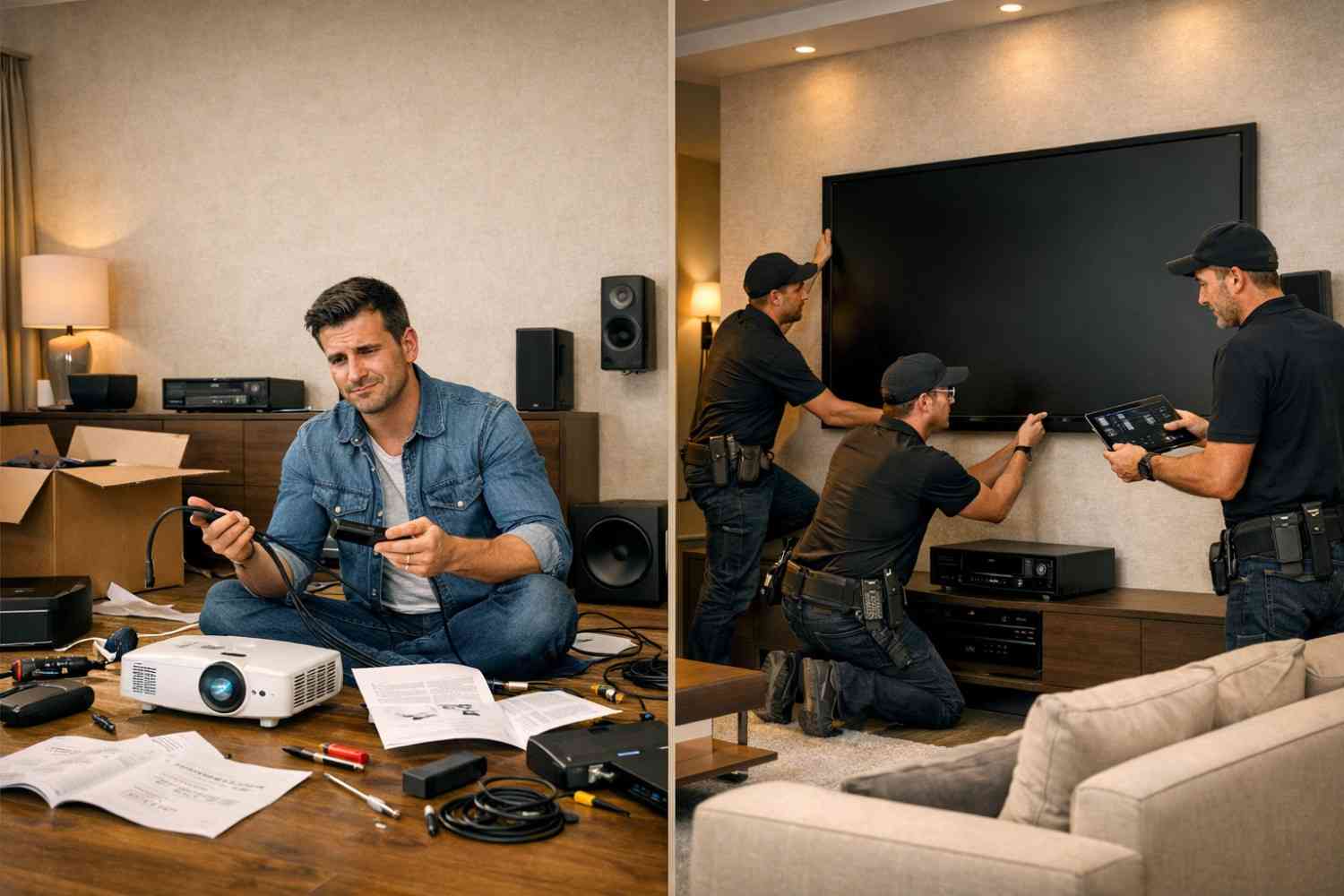
Understanding a DIY Home Cinema Setup
A DIY home cinema setup means you buy the equipment, install it yourself, and connect every device without professional support. Many people choose this option because they enjoy learning new skills and want full control over the process.
You need to select the right television or projector, speakers, cables, receiver, and seating arrangement. You also need to connect every device correctly and adjust the sound and picture settings. While many online guides are available, every room has different dimensions, lighting, and acoustic conditions, which can make installation more challenging than expected.
DIY projects can also take longer if you are unfamiliar with audio and video equipment.
What Does a Professional Installation Include?
A professional installation involves planning, equipment placement, cable management, and system testing. Instead of simply connecting devices, professionals focus on creating the best viewing and listening experience for the available space.
They consider room size, wall layout, speaker positioning, screen distance, lighting conditions, and sound quality. Proper cable routing also helps keep the room clean and organized.
Professional installation is especially useful when installing ceiling speakers, wall-mounted displays, projectors, or hidden wiring.
Comparing Installation Quality
One of the biggest differences between DIY and professional installation is the final quality.
With a DIY setup, even small mistakes in speaker placement or display positioning can affect sound and picture performance. Incorrect cable connections or poor calibration may also reduce the overall experience.
Professional installers usually follow recommended placement guidelines and carefully test every component before completing the project. This often leads to balanced sound, better picture quality, and smoother system performance.
Time and Effort Required
DIY installation may seem simple at first, but it often requires many hours of planning and testing. You may spend time reading manuals, watching tutorials, purchasing additional cables, or fixing connection issues.
A professional team already understands the installation process and can complete many tasks more efficiently. This allows homeowners to enjoy their entertainment system sooner without spending days solving technical problems.
Saving time is one reason many people consider professional installation.
Equipment Compatibility Matters
Modern home cinema systems include many devices that must work together correctly.
These may include:
- Television or projector
- AV receiver
- Surround sound speakers
- Streaming devices
- Gaming consoles
- Media players
- Smart home controls
If one device is not configured correctly, the entire system may not perform as expected. A professional installer checks compatibility between devices and ensures they communicate properly.
DIY users may need extra time to troubleshoot software settings, firmware updates, and connection problems.
Cable Management Makes a Big Difference
Visible cables can make even an expensive entertainment room look untidy.
DIY installations often leave cables exposed because hiding them safely requires additional planning and tools. Poor cable organization may also make future maintenance more difficult.
Professional installers usually organize cables carefully, helping create a cleaner appearance while reducing clutter behind equipment.
A neat installation also makes cleaning and future upgrades easier.
Room Design Affects Performance
Many people focus only on buying expensive equipment. However, room design plays a major role in overall performance.
Lighting can affect screen visibility, while room shape can influence sound quality. Furniture placement, wall materials, and ceiling height also impact the listening experience.
Professionals evaluate these factors before installation. They adjust equipment placement based on the room instead of using a one-size-fits-all approach.
DIY users may overlook these details, resulting in less balanced sound or reduced picture quality.
Understanding the Overall Cost
Many homeowners choose DIY because they hope to reduce installation costs.
While this can work for simple systems, additional expenses often appear during the project. You may need extra mounting hardware, longer cables, specialized tools, replacement connectors, or additional accessories.
If mistakes occur, correcting them may increase the overall cost even further.
Professional installation includes experience, planning, and testing, which may help avoid unexpected expenses caused by installation errors.
Which Option Fits Different Homeowners?
DIY installation may be suitable if you:
- Enjoy technical projects
- Have experience with electronics
- Have enough free time
- Plan a basic entertainment setup
Professional installation may be a better choice if you:
- Want a clean finished appearance
- Plan a dedicated home theater room
- Need wall-mounted equipment
- Prefer reliable system performance
- Want to avoid technical troubleshooting
There is no single answer for everyone. The right choice depends on your experience, goals, and the complexity of your entertainment system.
Choosing between DIY installation and a home cinema installation company should be based on your personal needs rather than price alone. A simple setup may work well as a DIY project, while larger or more advanced systems often benefit from careful planning and professional installation. Understanding the strengths of both options helps homeowners create a home cinema that matches their space, budget, and entertainment expectations.